

Things to Consider When Pricing up an Electrical Job

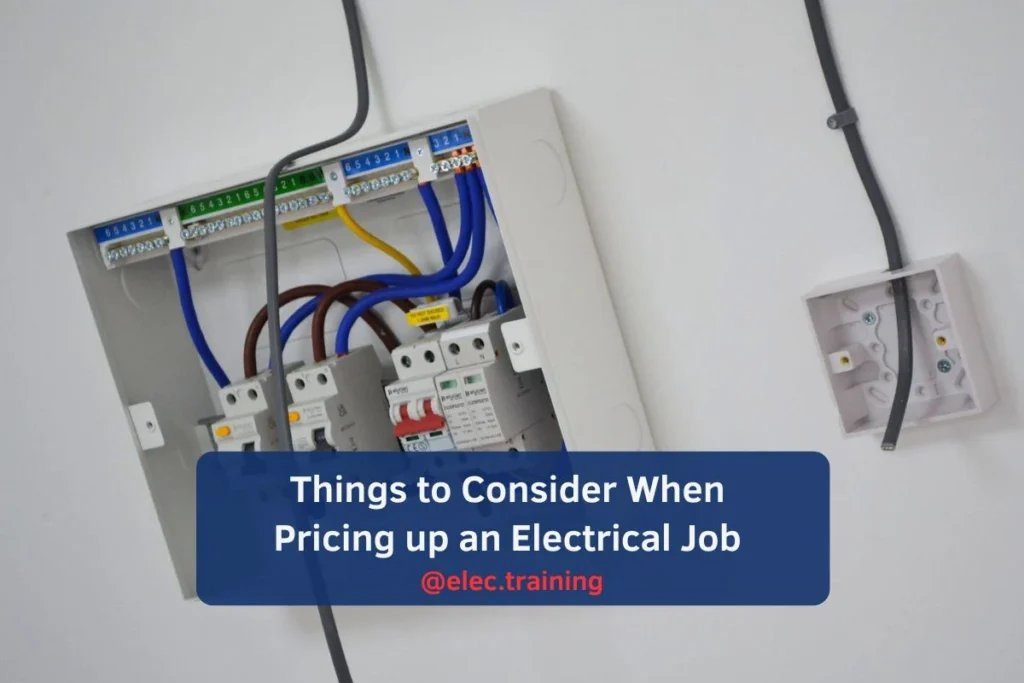
When you qualify as an electrician and decide to work for yourself, one of the first challenges you face is pricing. Getting it wrong can leave you out of pocket, but with the right planning and process you can set rates that reflect your skills, time and the real value of the work.
This guide sets out practical considerations that every new electrician should think about when quoting. From consumer unit changeovers to dealing with h idden wiring issues, it’s about preparing properly so you protect both your income and reputation.
Consumer unit changeovers
A common request from customers is a consumer unit upgrade. On the surface, this looks like a straightforward job, but issues can quickly appear. Before you even agree a price, it’s worth carrying out at least the “dead” tests — and ideally a periodic inspection — on the existing wiring.
Without these checks, you risk committing to a price that doesn’t account for unseen faults. If problems emerge after the board change, you may have to absorb the costs or face an unhappy customer if you try to add extras later. Not only does this hit your profit, it eats into your allocated job time. And in this industry, as everyone says, time is money.
Pre-board checks
Key tests such as Ze and insulation resistance should always be carried out before you quote. For example:
- If Ze is too high, the energy supplier needs to be contacted before work begins.
- Insulation resistance gives you confidence the installation won’t trip RCDs once upgraded.
Explaining this to customers is part of your role. You are the qualified electrician who will be certifying the work, and they need to understand why these checks are essential.
For background on why testing standards evolve, see Future-Proof Your Electrical Skills: What the Latest EAS Updates Mean for Every UK Electrician — it outlines how current regulations are shaping expectations for testing and competence.
Hidden problems in older wiring
Older properties often hide issues that only become visible once you upgrade equipment. For instance, moving from a re-wireable BS3036 fuse box to a modern split-load RCD unit can expose long-standing faults.
While these faults may not have tripped fuses previously, sensitive RCDs will detect them immediately, leading to nuisance tripping. Customers may say, “well it worked before”, but it’s your responsibility to explain that new safety standards reveal problems that were always present. Repairs must be addressed before sign-off.
It’s here that experience pays off. Even if you’re newly self-employed, building awareness of these situations helps you avoid under-pricing. Training centres such as Electrician Courses Leeds cover this in depth, preparing learners for real-world challenges like hidden wiring faults.
Setting your pricing structure
When quoting jobs:
- Gather information early – ask detailed questions during site visits.
- Estimate realistically – factor in time for testing, rectifying faults, and customer discussions.
- Choose how to charge – fixed-price for s traightforward installs, hourly for uncertain jobs like fault-finding.
- Account for materials – include not just unit cost but collection or delivery time.
By combining these steps, you reduce the risk of surprises and protect your income.
Special cases: EV charging
Another fast-growing area for electricians is EV charging point installation. Demand is rising quickly as the government pushes ahead with net-zero goals. This sector provides strong opportunities, but again, pricing requires care.
Seminars and training c ourses provide electricians with the knowledge to set realistic quotes and tap into available funding schemes. At Elec Training, we host free workshops for installers, helping them understand both the technical requirements and the business opportunities around EV charge point installs.
If you’re looking to specialise, the role of an Electrical Installation Tutor/Assessor shows how deep expertise in this area is valued — not just on site but in teaching the next generation of sparks.
Why careful pricing protects your business
Pricing correctly isn’t just about covering your time. It signals professionalism, reassures customers, and prevents d isputes. Poor quoting can lead to unpaid extras, wasted hours, and reputational damage. On the other hand, transparent and accurate pricing builds trust and leads to repeat work.
For new electricians, taking the time to plan, prepare, and test before quoting is the difference between scraping by and running a sustainable business.
Moving forward
As the FMB has shown in recent wage surveys, electricians remain among the highest-paid trades in the UK. But earnings only hold up if jobs are priced fairly. By adopting solid quoting processes, you protect yourself from unexpected losses and deliver a professional service every time.
For learners and newly qualified sparks in the Midlands, options like Electrician Courses Cannock provide both the technical training and the business awareness needed to succeed as a self-employed electrician.
To explore the full range of pathways, visit Elec Training and start shaping your career in a way that balances technical skill with financial confidence.
FAQ