

Electrical Fire Safety Week

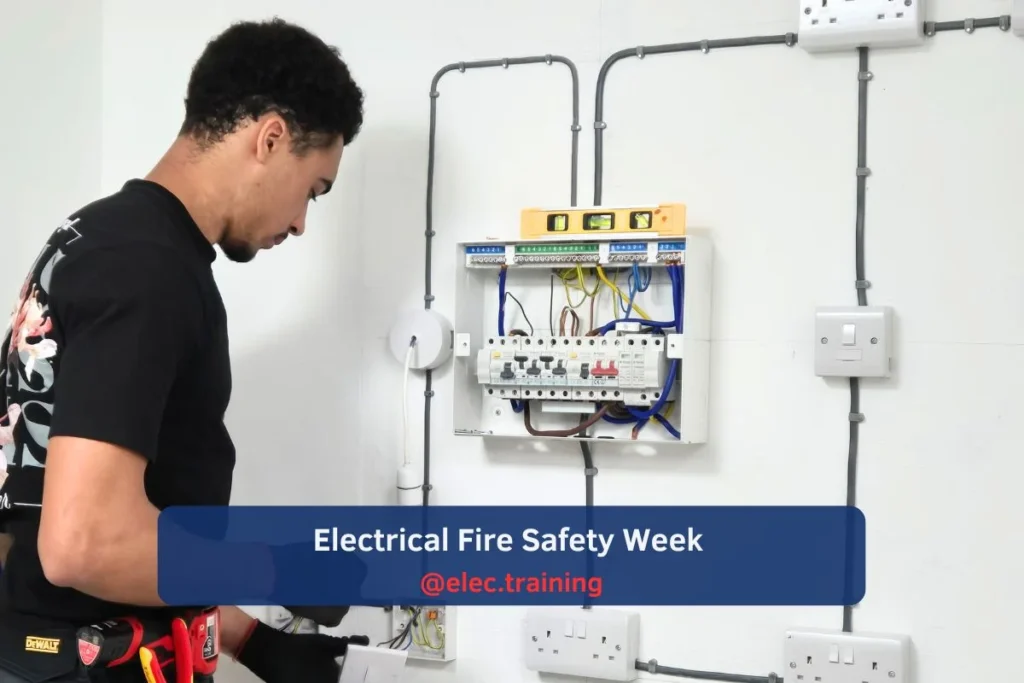
Electricity powers almost everything we use — from phone chargers and heaters to kitchen appliances — but many people still underestimate how easily f aults can cause fires. Each year in the UK, around 20,000 electrical house fires occur, with hundreds of serious injuries and dozens of fatalities.
Electrical Fire Safety Week, supported by organisations like Electrical Safety First, Fire Kills, and local Fire & Rescue Services, aims to remind everyone that prevention starts with awareness.
At Elec Training, we teach these same principles in Risk Assessment 4, where learners assess everyday hazards, plan control measures, and understand how small actions can prevent serious accidents.
Electrical fire safety tips every household should follow
- Don’tleave heaters unattended
Portable heaters are convenient, but they’re one of the biggest causes of electrical fires. Since 2009, they’ve been linked to over 3,800 fires, 1,000 injuries, and 73 deaths. Keep them well away from curtains, bedding, and furniture, and always switch them off when leaving a room.
- Watch out for counterfeit plugs and chargers
Always look for the CE or UKCA safety mark on electrical products. Cheap imitation chargers and cables can overheat, short-circuit, or cause electric shocks.
In Information in the Work Place 10, we explore how to verify information sources and identify reliable suppliers — a skill that’s just as valuable at home.
- Test your smoke alarms monthly
Every home should have at least one working smoke alarm per floor. The safest placement is in hallways and bedrooms. You’re four times more likely to die in a fire if your alarm isn’t working. Test monthly, replace batteries yearly, and never remove them for convenience.
- Check plugs and cables
If you notice frayed wires, burn marks, or loose plugs, stop using the device immediately. Replace damaged cables rather than taping them up. Tangled or bundled wires can trap heat and create a hidden fire risk, e specially behind furniture or entertainment units.
- Don’toverload sockets
A single 13-amp socket can only handle so much. Avoid stacking adapters or daisy-chaining extension leads. Too many high-powered devices (like kettles or heaters) in one socket can cause overheating and melting.
- Charge devices safely
Phones, laptops, and tablets generate heat when charging. Never charge them under pillows or bedding, and avoid leaving them plugged in overnight or unattended.
A phone under a pillow can easily reach ignition temperature, leading to smouldering fires while you sleep.
- Handle electric blankets with care
Electric blankets are another overlooked hazard. Around 65 fires each year start from faulty or misused blankets. Always turn them off before bed, never fold them for storage (roll or lay flat instead), and inspect for wear before every season.
If an electrical fire breaks out
- Get out, stay out, and call 999.
- Never try to extinguish an electrical fire with water.
- If it’s safe, switch off power at the mains — but only if you can do so without risk.
In Risk Assessment 5, we teach learners how to plan and act safely in emergencies — reinforcing that no property is worth a life.
Protecting people and pets
Pets often stay home while we’re out, so make sure no charging cables, heaters, or open sockets are left where they can chew or knock them over. Electrical Safety First’s campaign on pet safety is a good reminder that prevention protects every member of the household.
Electrical safety is everyone’s responsibility. Take a few minutes each month to check plugs, sockets, and alarms — those s mall habits could save your home.
If you want to explore how communication and safety awareness work hand in hand, visit Information in the Work Place 2.
FAQs