
Staying Cool on the Job: Summer Safety Tips for Electricians

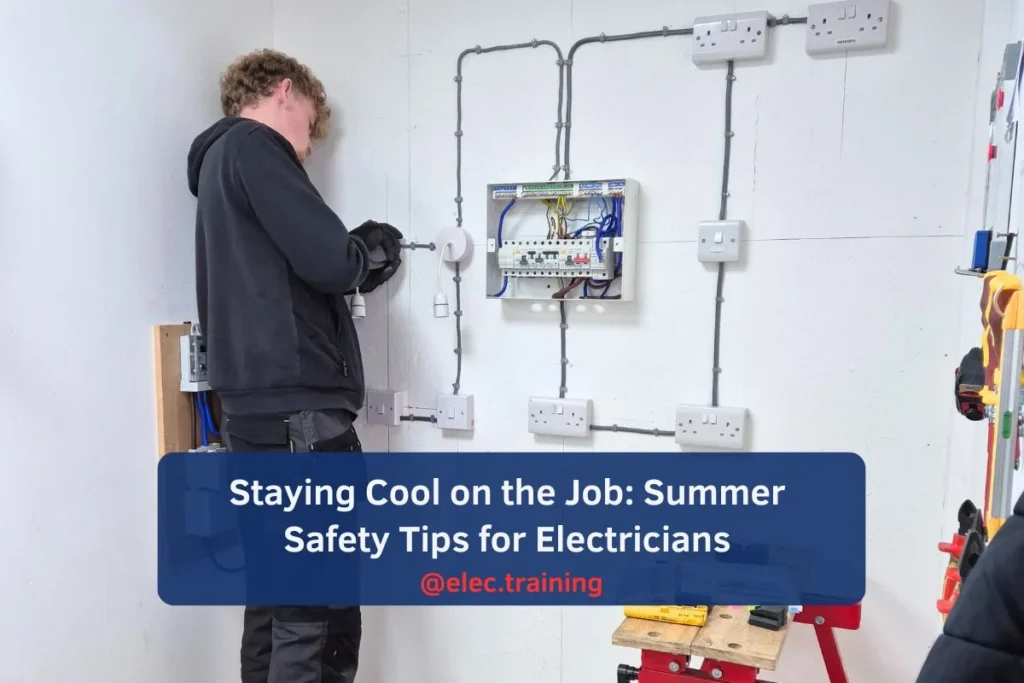
Working in the heat is part of the job for many tradespeople, but electricians face particular risks — from working in confined lofts to handling sensitive electrical components in high temperatures. Staying safe and cool isn’t just about comfort; it’s part of maintaining professional standards and preventing heat-related accidents.
Here are some simple but effective ways to protect yourself when the temperature rises.
- Keep your safety gear comfortable and breathable
Personal protective equipment (PPE) is essential, but the wrong clothing can trap heat. Choose lightweight, moisture-wicking materials that still meet BS EN standards. Avoid wearing dark layers under hi-vis where possible, and inspect your gear regularly to make sure it hasn’t degraded in the heat.
For more on how to select and maintain your PPE correctly, see: https://dev.elec.training/learning/unit-201-health-and-safety/lesson/asbestos-6/
Good preparation keeps you focused and alert on site — exactly what’s needed when you’re dealing with electrical systems.
- Manage your workload and breaks sensibly
Hot conditions increase fatigue, which can quickly lead to mistakes. Schedule demanding tasks for early morning or late afternoon when possible, and plan regular rest stops in shaded areas. Keep hydration constant — a cup of water every 15–20 minutes is a good rule of thumb.
Understanding how to communicate this within a team helps too. If a colleague shows signs of heat stress, be confident in how you raise it. See: https://dev.elec.training/learning/unit-210-communication/lesson/effective-communication-1/
- Know what to do in an emergency
Even experienced tradespeople can underestimate how quickly heat e xhaustion or electrical burns can escalate. Make sure you and your team are clear on site-specific emergency procedures — including where first-aid kits are kept and how to isolate power safely.
Take a refresher on electrical accident protocols at:
https://dev.elec.training/learning/unit-201-health-and-safety/lesson/accident-and-emergency-procedures-9/
Prompt, calm action can make all the difference if someone becomes unwell.
- Use cooling products wisely
Technology has caught up with trades. Cooling vests, neck wraps and hydrogel-lined undershirts can reduce body temperature by several degrees for up to eight hours. If you’re in lofts or poorly ventilated spaces, portable fans and frozen-bottle air coolers can help. Keep electrical tools out of direct sunlight to avoid overheating or insulation damage.
Effective communication also extends to equipment care — reporting faults e arly prevents downtime and ensures safety. See: https://dev.elec.training/learning/unit-210-communication/lesson/effective-communication-2/
- Take summer seriously —it’sa safety issue
Every year, UK employers record spikes in fatigue-related accidents during heatwaves. The Electrical Safety Council and HSE both emphasise temperature awareness as part of good site practice. Working smart in hot weather is another sign of a responsible electrician.
If you’re new to the trade or looking to u pskill, learning to manage risks like these forms part of every recognised qualification. You can explore your training route with Elec Training — a City & Guilds-approved centre helping learners gain real-world electrical experience across the West Midlands and beyond.
FAQs