

How to Find a Good Online Electrician Course to Start a New Career

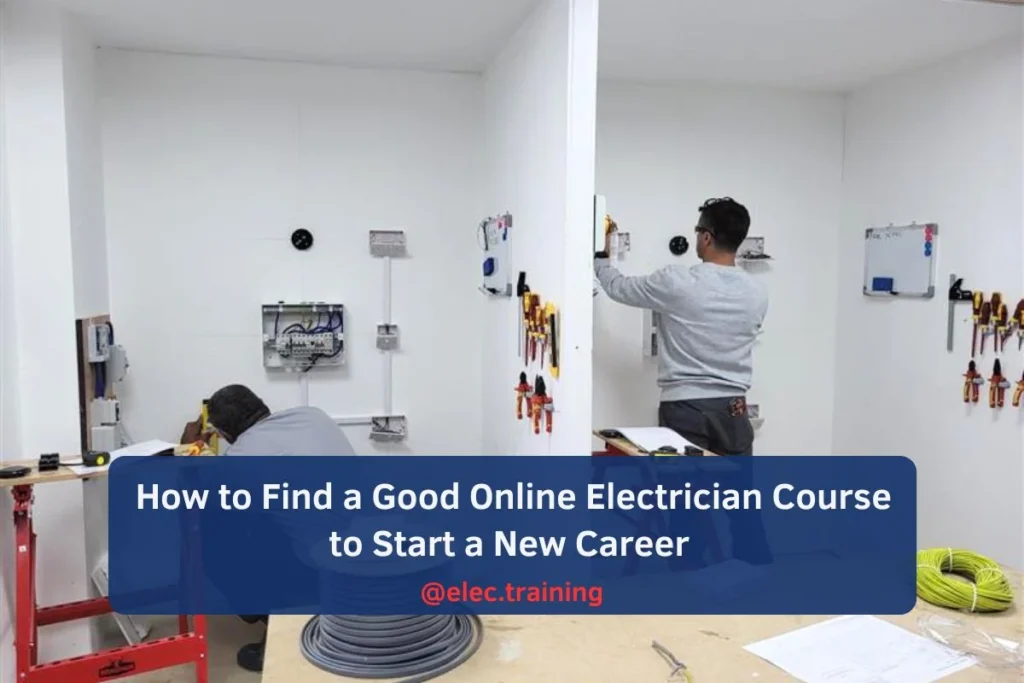
Retraining as an electrician has become one of the most popular career moves in the UK — and it’s easy to see why. The electrical industry offers strong job security, flexible self-employment routes, and a clear path to professional recognition. But with hundreds of online courses out there, it’s not always easy to tell which o nes are legitimate, properly accredited, or worth your time and money.
If you’re thinking of starting your journey online, here’s how to find a training provider that will genuinely prepare you for a successful career — not just sell you a certificate.
- Check Accreditation and Recognition
The first step is confirming the course is officially recognised by an awarding body such as City & Guilds or EAL. These are the organisations trusted by employers, electrical contractors, and certification schemes across the UK.
You should see the awarding body’s logo on the training provider’s website and marketing materials. But don’t stop there — visit the awarding body’s own site and search their approved centres list.
If the provider’s name doesn’t appear, walk away. Accreditation ensures the course content meets the standards set by BS 7671 (18th Edition Wiring Regulations) and that the qualifications lead to recognised progression routes like the Level 2 Diploma (2365-02), Level 3 Diploma (2365-03), or NVQ 2357.
For context, the Firefighting – Lesson 2 resource from Elec Training’s Health & Safety unit underlines how proper verification and emergency planning protect learners — a principle that applies equally when verifying course authenticity.
- Evaluate the Learning Environment
An online course shouldn’t feel like reading a PDF and taking a quiz. Good providers combine interactive learning, video demonstrations, and clear progression tracking.
Ask whether practical sessions are included later on, since full electrical qualifications require hands-on assessments. Any provider promising a “complete qualification” without p ractical work is misleading you.
Also consider where practical sessions take place. Well-equipped centres should include realistic setups — mock flats, domestic circuits, and inspection bays — rather than just classrooms or computer-based simulators.
When you can’t visit in person, look for virtual tours or independent learner reviews showing the facilities.
Understanding workplace safety remains essential even when studying online. The Policies and Procedures – Lesson 3 module explores how training environments must maintain safe working systems — a reminder that a responsible provider takes this seriously.
- Check Tutor Ratios and Support
Training quality depends heavily on instructor availability. If you’re joining a practical course later, ask how many learners share each tutor. For hands-on electrical work, anything beyond 10:1 is a red flag.
Online, look for clear access to tutor feedback, one-to-one messaging, and responsive support hours. Providers offering flexible assistance — evenings, weekends, or extended hours — show a genuine commitment to learner success.
Equally, ask whether they provide after-course support. Good centres stay in touch, offering guidance on progressing to the NVQ or arranging work placements once you complete your initial qualifications.
A culture of safety and responsiveness underpins all good training. The Firefighting – Lesson 3 resource highlights the value of preparation and proactive response — qualities you should expect from your training team too.
- Compare Course Costs and Inclusions
Course prices vary widely, but cheaper doesn’t always mean better value. Some low-cost providers cut corners by excluding essential materials, assessments, or certification fees.
Ask for a full cost breakdown, including registration fees, exam charges, and optional extras. Reputable training centres are t ransparent and can explain what you’re paying for.
If a provider seems evasive or offers “limited time” deals, that’s usually a warning sign. Reliable providers let you review the details calmly and answer your questions clearly.
In addition, find out what happens if your circumstances change — can you defer, pause, or transfer your course? Flexibility matters, especially if you’re balancing work or family commitments.
To understand how structured decision-making applies to real scenarios, see Policies and Procedures – Lesson 4. It explains how consistent processes lead to safer, fairer outcomes — an approach that also helps when choosing between multiple training options.
- Look for Genuine Human Interaction
Even in a digital world, good learning depends on people. A trustworthy training provider should feel approachable from your first contact — not like a call centre script.
Check how quickly they respond to enquiries and whether you can speak to tutors, not just sales staff. Ask specific questions about qualifications, assessments, and progression routes. A provider that gives clear, jargon-free answers is almost always the safer choice.
It’s also worth looking at the organisation’s background. Do they specialise in electrician training, or are they a generic e-learning company offering hundreds of unrelated courses? Real centres have physical training sites, compliance staff, and learner success stories you can verify.
A good way to assess their credibility is by visiting or calling them directly. If you can’t reach anyone knowledgeable about electrical qualifications, that’s your answer.
- Trust Experience, Not Hype
Modern training platforms often rely on flashy websites and bold claims, but what really matters is track record. Ask how long they’ve been trading, what pass rates look like, and whether they’ve partnered with employers for work placements or NVQs.
Elec Training, for example, is a City & Guilds-approved electrical training centre based in Wolverhampton, serving learners from Birmingham, Shrewsbury, and across the wider West Midlands. Their teaching combines practical workshops with online resources designed to support real-world learning.
Good training should feel structured, not improvised. That’s why accredited providers incorporate verified learning sequences, similar to those outlined in formal modules like the Firefighting – Lesson 2, ensuring learners progress safely and confidently.
Starting a new career as an electrician is a big step — one that requires both commitment and the right foundation. The right online course will do more than teach theory; it will guide you through each stage of qualification, support your learning, and connect you to real progression routes in the trade.
So, take your time, research thoroughly, and never rush into booking the first option that appears on Google. The best training providers will always welcome your questions — and give you honest answers.
If you’re ready to begin your journey toward becoming a qualified electrician, explore Elec Training’s range of online and classroom-based electrical courses at
https://dev.elec.training/.
FAQs