

Are Electricians Really Earning £156k a Year?
- Technical review: Thomas Jevons (Head of Training, 20+ years)
- Employability review: Joshua Jarvis (Placement Manager)
- Editorial review: Jessica Gilbert (Marketing Editorial Team)
- Last reviewed:
- Changes: Updated with 2025/2026 ONS ASHE data, clarified gross turnover versus net take-home distinction, expanded self-employed cost breakdowns
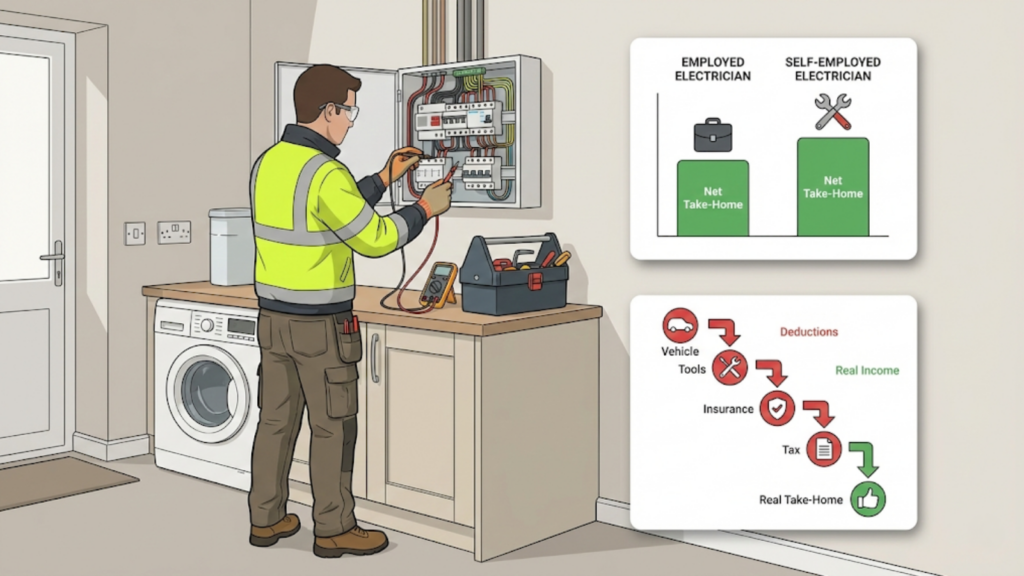
You’ve probably seen the claims. Social media posts showing electricians driving new Mercedes vans, marketing ads promising six-figure incomes after a fast-track course, recruiters talking about £600 day rates like they’re standard across the industry.
Here’s what you actually need to know: the £156k figure floating around social media isn’t a salary. It’s not even close to what most electricians take home. It’s a mathematical ghost created by multiplying high-end day rates by 260 working days, ignoring holidays, sick days, quiet periods, unpaid admin time, and the considerable costs of actually running a trade business.
The median gross annual earnings for a full-time employed electrician in the UK sit at £39,039 according to ONS data. That’s the middle point where half earn more and half earn less. Not £156k. Not even close to £156k. The actual figure that represents typical electrician earnings in 2025.
This article breaks down where the £156k claim comes from, what electricians actually earn across different employment structures, what costs eat into self-employed turnover, and why these inflated figures get shared so widely despite being mathematically implausible for the vast majority of people working in electrical installation.
Where the £156k Claim Actually Comes From
The £156k figure appears through a specific type of mathematical optimism. Someone takes a high-end day rate (£600), multiplies it by five days per week, then multiplies that by 52 weeks. £600 x 5 x 52 = £156,000. Job done, apparently.
Except it ignores several inconvenient realities. That £600 day rate represents emergency call-out pricing or specialist London commercial work, not standard domestic installation rates. It assumes you work every single day without holidays (28 days minimum for employed people, self-funded for contractors). It assumes zero sick days, zero quiet periods between jobs, zero unpaid time spent quoting, invoicing, chasing payments, or doing accounts.
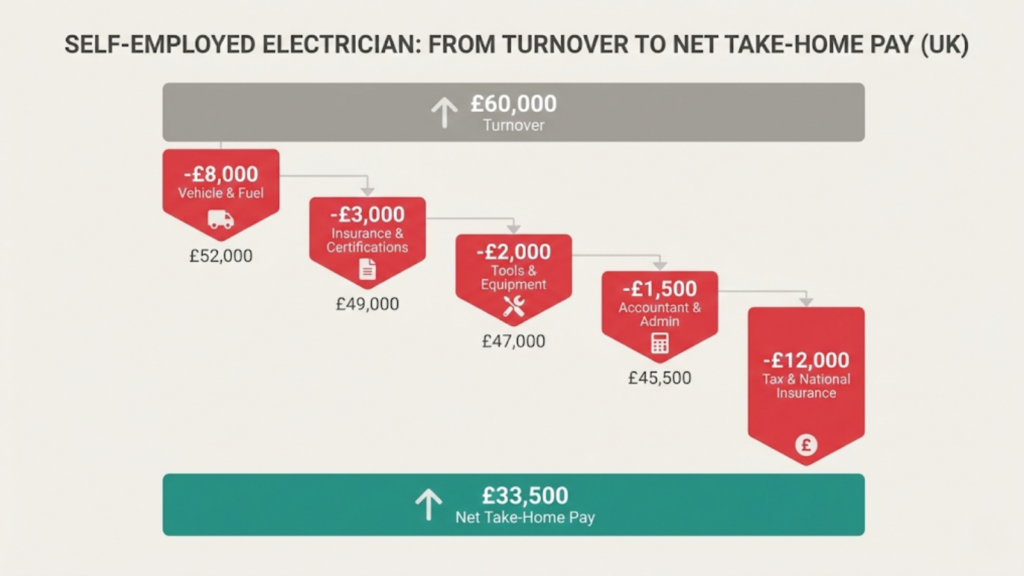
It also confuses gross turnover with personal income. A self-employed electrician might invoice £150k across a year if they’re running a small team or doing high-value commercial projects. But after paying a mate or apprentice (£25k to £35k), fuel and vehicle costs (£8k to £12k), insurance and certifications (£3k to £5k), materials for jobs where you’re supplying (£15k to £25k), and tax, that personal take-home drops to somewhere between £50k and £65k.
The figure gets shared because it’s aspirational. Training providers use “potential earnings” to sell expensive courses. Recruiters quote annualized shutdown rates that only last two weeks. Social media thrives on outlier success stories. But the ONS data tells a different story: median £39,039 for employed electricians, with the 90th percentile (top 10%) reaching around £55,000 to £60,000.
What Electricians Actually Earn: The ONS Data
ONS Annual Survey of Hours and Earnings (ASHE) provides the most reliable data on UK electrician earnings because it’s based on PAYE tax records, not self-reported surveys or marketing claims.
Employed electricians (full-time):
- Median gross: £39,039
- 10th percentile: £28,000 (entry-level, recently qualified)
- 90th percentile: £55,000 to £60,000 (experienced, specialist roles)
- Mean hourly rate: £18.04 (excluding overtime)
Regional variations matter. London and South East roles command 10% to 20% premiums, while northern regions typically sit 20% to 30% below the median. But even London-based employed electricians aren’t hitting £156k. Senior roles with major contractors might reach £50k to £60k gross, which after tax becomes £37k to £43k net.
Entry-level electricians (0 to 3 years post-qualification) earn £26,000 to £33,000. Mid-career (5 to 10 years) reaches £35,000 to £45,000. Senior employed electricians plateau around £40,000 to £60,000 unless moving into management, inspection, or highly specialized industrial work.
Self-employed figures are less reliable because they rely on surveys rather than tax records, and there’s obvious incentive to under-report. Best estimates suggest median net profits of £40,000 to £60,000 after deducting £10,000 to £20,000 in business costs. Some contractors hit £70k to £90k in good years with consistent work, but these are the successful operators, not the typical outcome.
PAYE Versus Self-Employed: The Real Comparison
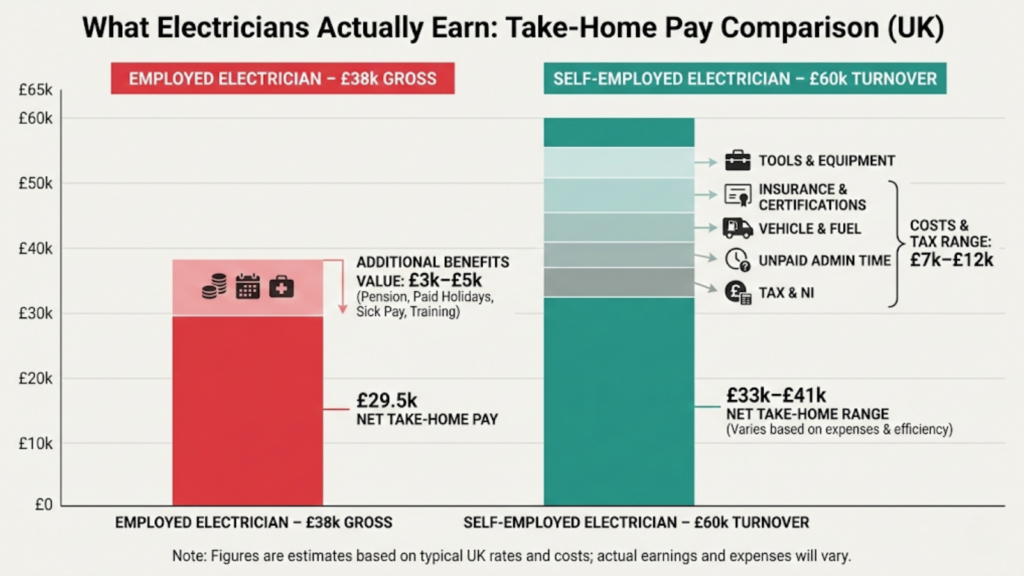
Comparing employed and self-employed earnings requires looking beyond gross figures to actual take-home and total package value.
PAYE employed electrician on £38,000:
- Net take-home: £29,500 (after tax and NI)
- 28 days paid holiday: £3,000 to £5,000 value
- Employer pension contributions: 3% to 5% (£1,140 to £1,900)
- Sick pay coverage
- No equipment or vehicle costs
- Total package value: approximately £33,640 to £36,400
Self-employed on £60,000 turnover:
- Business costs: £7,000 to £12,000 (vehicle, fuel, tools, insurance, certifications, accountant)
- Tax and NI: £12,000 to £15,000
- Net take-home: £33,000 to £41,000
- Self-funded holidays and pension
- Risk of payment delays or bad debts
- Unpaid admin time (quoting, invoicing, accounts)
The self-employed gross looks better (£60k versus £38k). The net reality is often closer than people expect. You’re typically 0% to 25% better off self-employed at similar activity levels, but you’re carrying more risk, more admin burden, and more variability.
CIS subcontractors get 20% deducted at source (if registered), which gets offset against final tax bill. Day rates under CIS vary regionally from £220 to £400, but you’re still covering your own costs and dealing with gaps between contracts.
Ltd companies offer tax efficiency for higher earners through dividend strategies, but you’re paying corporation tax (19% to 25%) plus dividend tax (8.75% to 39.35%), and you need enough margin to justify the accountancy costs.
Electricians considering self-employment often underestimate how smoke alarm regulations affect contractors differently than employed installers, particularly regarding compliance certification and liability insurance requirements that add to business operating costs.
What It Actually Takes to Earn £150k+
Reaching genuinely high earnings (£100k+ net) as an electrician requires a specific combination of factors that aren’t available to most people in the trade.
Niche specialization: High voltage switching, CompEx (explosive atmospheres), offshore work, or highly specialized industrial control systems. These aren’t “electrician plus a short course” qualifications. They’re substantial additional training requiring years of relevant experience before you can even access the courses.
Extreme hours: Consistent 60 to 70 hour weeks including regular weekend and night work. Possible during your 20s and 30s, much harder to sustain long-term, particularly if you have family commitments.
Business ownership: Moving from sole trader to employing 3+ people and securing higher-value contracts. You’re now running a business rather than working as an electrician. Different skill set, different risks, different daily reality.
Location premium: Working exclusively on central London commercial projects where rates are highest. Offset by London living costs, congestion charges, and higher overheads.
Shutdown work: Short-term high-intensity contracts (two to four weeks) during factory or facility shutdowns, often at unsociable hours, sometimes away from home. The £600+ day rates are real during these periods, but they’re not year-round work.
The people earning £150k+ exist. They’re real. But they represent perhaps the top 0.1% to 0.5% of electricians, usually combining several of these factors (specialized + extreme hours + business ownership, for example), and often burning out after a few years because the lifestyle isn’t sustainable.
"The £150k+ figures you see shared online usually involve shutdown work, overtime rates that aren't sustainable year-round, or business turnover rather than personal income. Learners planning career changes need realistic expectations: most employed electricians earn £35k to £45k mid-career, with self-employed netting £40k to £65k depending on contracts and overheads."
Joshua Jarvis, Placement Manager
Why These Claims Are Misleading for Career Decisions
High earnings claims create several problems for people considering electrical training as a career change.
Survivorship bias: The electricians earning £100k+ are the ones posting about it online, appearing in marketing materials, and being referenced in social media discussions. The electricians earning £35k to £45k (which is actually solid money for skilled manual work) don’t generate viral posts. This creates a distorted perception of typical outcomes.
Revenue versus salary confusion: Training provider ads and recruiter posts often quote business turnover or gross project values without clarifying that these aren’t personal salaries. Someone turning over £120k might net £55k after costs. That’s good money, but it’s not what the headline implied.
Ignoring the qualification timeline: Entry-level electricians earn £26k to £33k. It takes 5+ years of post-qualification experience to reach £50k+ earnings in most cases. The high figures require either substantial experience or accepting significant trade-offs (extreme hours, time away from home, high-risk environments).
Understating volatility: Self-employed income can drop 20% to 30% in economic downturns. Work dries up. Payment delays increase. The predictability of PAYE suddenly looks more attractive when you’ve had three consecutive months below £2,000 turnover.
Missing the complete picture: Comparing electrical work to other careers requires including the full package value (pension, holidays, sick pay for employed), the realistic progression timeline, the physical demands, and the work-life balance trade-offs.
For people in their late 20s or 30s with family commitments, a stable £40k PAYE role with 28 days holiday and employer pension contributions might represent better value than chasing £80k turnover as a contractor with all the associated risks and admin burden.
Understanding realistic earnings matters when considering qualification routes through JIB cards, as the time and cost investment in proper credentials needs balancing against actual market rates rather than inflated social media claims.
Common Myths Versus Reality
Myth: “All electricians earn six figures”
Reality: Median employed gross is £39,039. Self-employed median net profits are £40,000 to £60,000. Six-figure earners exist but represent a tiny percentage of the trade, usually with specialized skills, business ownership, or extreme working hours.
Myth: “Fast-track training leads to high income immediately”
Reality: Qualification enables entry to the trade. Earnings depend on experience, location, employment structure, and market demand. Most newly qualified electricians start £26k to £33k, taking 5+ years to reach higher earnings brackets.
Myth: “Turnover equals salary”
Reality: Self-employed electricians turning over £80k might net £45k to £55k after costs. Business revenue isn’t personal income. Costs include vehicle, insurance, tools, certifications, accountant fees, unpaid admin time, and tax.
Myth: “Everyone can reach these earnings”
Reality: High earnings require specific combinations of specialization, experience, location, hours worked, or business skills. Physical demands, market conditions, and personal circumstances limit who can sustain extreme working patterns long-term.
Myth: “It’s all tax-free cash”
Reality: HMRC scrutinizes trades heavily. CIS deductions happen at source. Making Tax Digital requires digital records. Cash work creates serious legal and tax risks. Most electrical work requires proper certification and insurance, creating audit trails.
Career changers researching realistic earnings should understand that apprenticeship routes build experience gradually over 3 to 4 years, providing steady income progression rather than immediate high earnings that unrealistic marketing claims suggest.
The Bottom Line: Realistic Expectations
Electrical work offers solid earning potential. Median employed earnings of £39,039 compare favorably to UK median wages across all occupations (£33,000). Experienced self-employed electricians netting £50k to £70k are doing well financially. These are good careers providing stable income for skilled tradespeople.
But £156k isn’t a realistic target for the vast majority of electricians. It’s not impossible (some combination of niche specialization, business ownership, extreme hours, and London commercial work can get there), but it’s not representative of typical outcomes.
If you’re considering electrical training as a career change, plan around these figures instead:
Years 0-3: £26k to £33k (apprenticeship or newly qualified) Years 3-7: £33k to £45k (gaining experience, building reputation) Years 7+: £40k to £60k employed, or £45k to £75k net if self-employed and busy
Those figures assume you complete proper qualifications (Level 3 NVQ, 18th Edition, AM2), secure consistent work, continue developing skills, and work in areas with reasonable demand. They represent realistic progression, not exceptional outliers.
The electricians earning £100k+ exist. They’re just not the default outcome. They’re the result of specific choices involving trade-offs (hours, risk, specialization, business management) that not everyone can or wants to make.
Call us on 0330 822 5337 to discuss realistic electrical training pathways based on actual market rates rather than social media claims, understand the true cost-benefit analysis of qualification investment versus earning potential, explore employment versus self-employment structures with honest breakdowns of net take-home after costs, or get guidance on career progression timelines that reflect how long it actually takes to reach higher earning brackets in UK electrical installation work.
References
Primary Official Sources
- ONS Annual Survey of Hours and Earnings 2025: https://www.ons.gov.uk/employmentandlabourmarket/peopleinwork/earningsandworkinghours
- HMRC Construction Industry Scheme guidance: https://www.gov.uk/what-is-the-construction-industry-scheme
- GOV.UK Self-Employment Tax Information: https://www.gov.uk/working-for-yourself
Industry Wage Data
- ECA Technical and Wage Information: https://www.eca.co.uk/taking-action/skills-for-the-future
- Reed Electrician Salary Guide: https://www.reed.co.uk/career-advice/how-much-do-electricians-earn
- Indeed UK Electrician Salaries: https://uk.indeed.com/career/electrician/salaries
CIS and Tax Guidance
- Low Incomes Tax Reform Group CIS Information: https://www.litrg.org.uk/working/self-employment/construction-industry-scheme-cis
- AccountingPeople CIS Guide: https://accountingpeople.co.uk/construction-industry-scheme-cis-guide
Note on Accuracy and Updates
Last reviewed: 5 February 2026. This page is maintained; we correct errors and refresh sources as ONS data updates, tax thresholds change, and employment market conditions shift. Current content reflects ONS ASHE 2025 data showing median electrician earnings of £39,039, standard CIS deduction rates of 20% for registered subcontractors, and typical self-employed cost structures based on industry surveys and forum discussions. Earnings figures represent gross pay for employed roles and net profits after costs for self-employed, with regional variations acknowledged. Marketing claims of £150k+ typically reference gross business turnover before costs, extreme outlier scenarios, or unsustainable working patterns not representative of median outcomes. Next review scheduled following ONS ASHE 2026 publication or significant changes to electrical trade employment structures.