

Health and Safety Regulations: Real Protection or ‘Barmy Bans’?

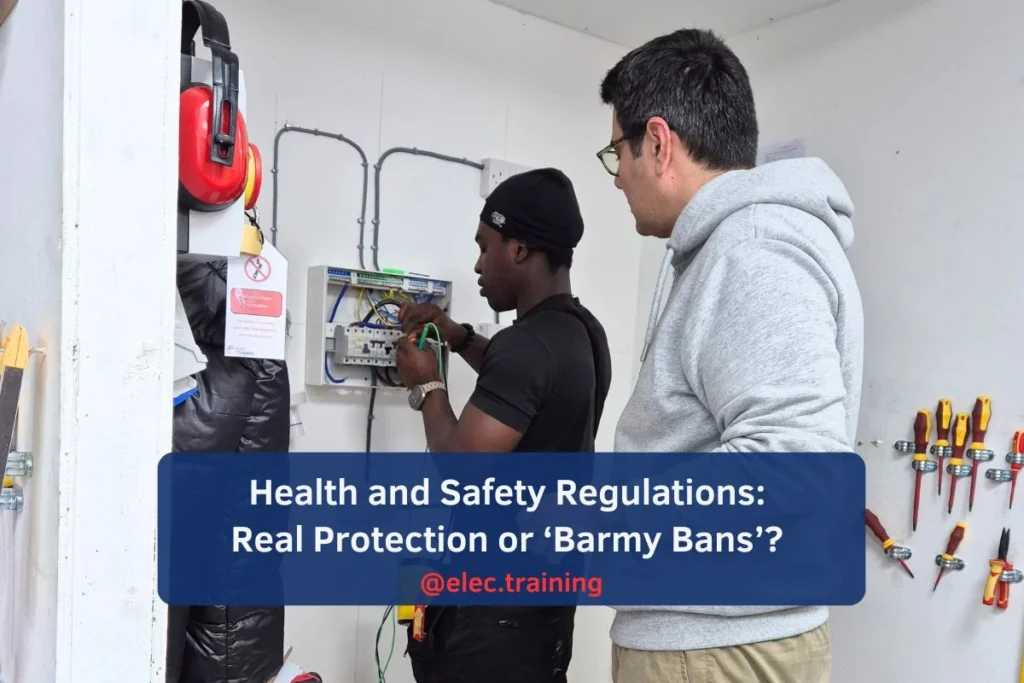
Health and safety legislation has been protecting workers since 1974, and the core purpose has always remained the same: prevent avoidable harm and keep workplaces safe. Yet over the years, some stories have raised eyebrows — leading to a public p erception that regulations have gone too far, overshadowing the serious risks they are designed to control.
Understanding how the rules apply — especially in trade environments — is essential, whether you’re an employer, an apprentice or someone looking to start out in the industry.
A legal responsibility for employers
Employers have a duty of care to protect staff and members of the public from harm. Failure to comply can lead to prosecution, significant fines and — in the worst cases — prison sentences. Despite this, many still underestimate the consequences of ignoring hazards or failing to report issues.
Workers are encouraged to speak up confidently about risks on site. For guidance on communication approaches that help prevent incidents, explore:
https://dev.elec.training/learning/unit-210-communication/lesson/communication-methods-4/
The rise of the ‘elf & safety’ myth
Media headlines often focus on the most u nusual examples:
- Dodgem cars told not to bump
- Schools banning sack races and monkey bars
- Local councils restricting kite flying
- Hotels refusing bath mats
- Cafés declining to serve drinks to bus passengers
While such stories generate laughs, they can also trivialise genuine safety legislation — and discourage workers from reporting hazards that could lead to real injuries.
Health and safety that matters in the trades
If you work with tools, fixed wiring or height access equipment, your day-to-day risk profile is far from trivial. These regulations exist to save lives:
Management of Health and Safety at Work Regulations 1999
Every employer must assess risks, provide training and appoint competent individuals to oversee compliance.
Manual Handling Operations Regulations 1992
Back injuries remain one of the most common causes of lost workdays. Workers should avoid lifting loads beyond recommended safe limits — and employers must assess risks and display load information clearly.
To learn more about handling ladders, towers and access gear safely on-site:
https://dev.elec.training/learning/unit-201-health-and-safety/lesson/access-equipment-10/
Workplace (Health, Safety and Welfare) Regulations 1992
Ventilation, lighting, welfare facilities, clear escape routes — basics that prevent everyday accidents.
PPE at Work Regulations 1992
Free PPE must be provided wherever hazards can’t be eliminated — from helmets and eye protection to hearing and respiratory equipment.
Health and safety for desk workers too
Regulations don’t only apply to high-risk environments. If you spend an hour or more using a computer daily, your employer must support safe screen use, ergonomic seating and regular eye tests.
For better workplace communication when reporting ergonomic issues:
https://dev.elec.training/learning/unit-210-communication/lesson/communication-methods-5/
Electricity always demands respect
Electricity at Work Regulations 1989 require anyone working on electrical systems to ensure installations remain safe and fully compliant. A single shock can cause life-changing injuries — which is why qualified supervision and proper training are non-negotiable.
Curious about how pros assess ladder or elevated work platforms when working near electrical components? Start here:
https://dev.elec.training/learning/unit-201-health-and-safety/lesson/access-equipment-12/
Safety and professionalism go hand-in-hand
Health and safety isn’t about stopping fun — it’s about making s ure everyone goes home safely at the end of the day. And for electricians, compliance isn’t just best practice — it’s the law.
If you’re building a career where safety matters and skills are in high demand, find out how you can train professionally with Elec Training:
https://dev.elec.training/
FAQs